- Free Consultation: 866-966-5240 Tap Here To Call Us






Motor Vehicle Accident Law: Your Complete Guide for 2026


Motor vehicle accidents disrupt lives in an instant, leaving victims with injuries, property damage, and countless questions about their legal rights. Understanding motor vehicle accident law becomes essential when you find yourself navigating insurance claims, medical bills, and potential litigation after a collision. This comprehensive guide explores the foundational principles of motor vehicle accident law, helping California residents understand their rights and obligations following a traffic collision.
Understanding the Foundation of Motor Vehicle Accident Law
Motor vehicle accident law encompasses the legal principles, statutes, and regulations that govern liability, compensation, and justice when traffic collisions occur. This specialized area of personal injury law combines elements of negligence theory, statutory requirements, and insurance regulations to determine fault and award damages.
California operates under an at-fault system for motor vehicle accidents, meaning the driver responsible for causing the collision bears financial liability for resulting damages. This differs significantly from no-fault auto insurance systems used in other states, where each driver’s insurance covers their own injuries regardless of who caused the accident.
Key Legal Principles in Accident Cases
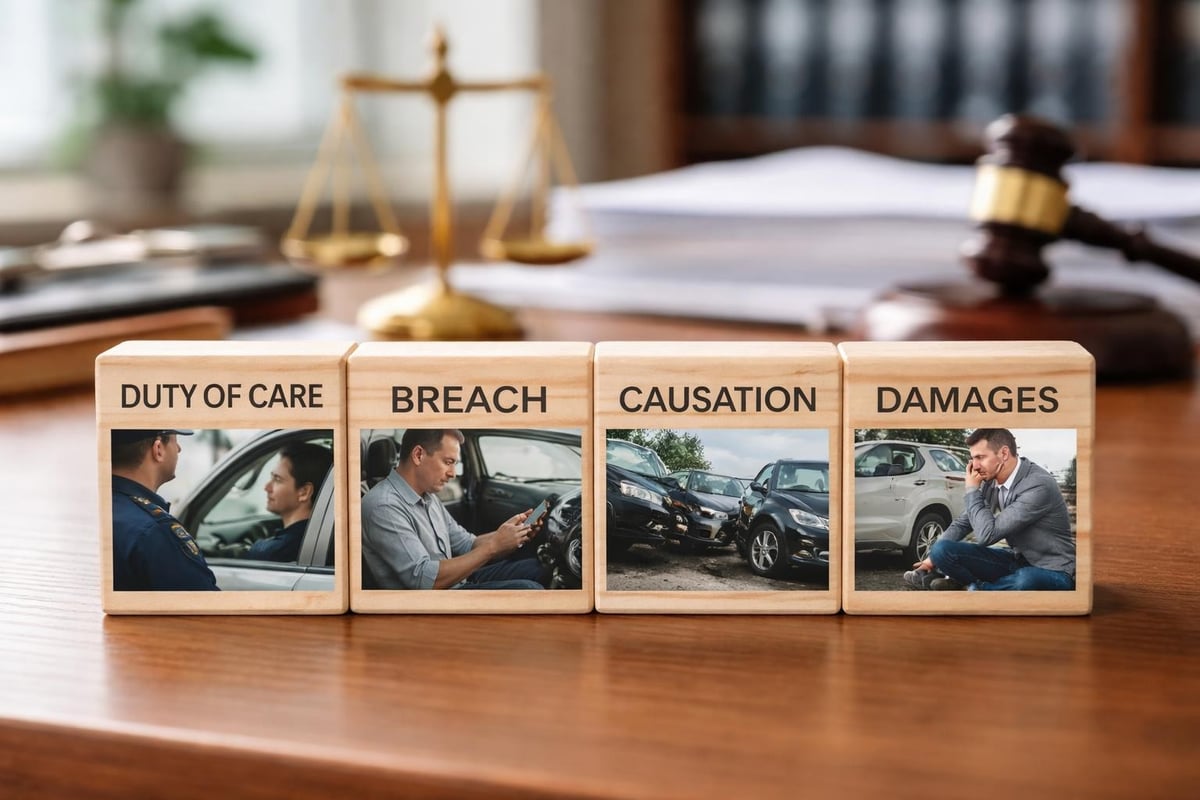
Negligence forms the cornerstone of most motor vehicle accident claims. To establish negligence, plaintiffs must prove four elements: duty of care, breach of that duty, causation, and damages. Every driver owes a duty to operate their vehicle safely and follow traffic laws. When a driver breaches this duty through careless or reckless behavior and causes an accident, they become liable for resulting harm.
Several factors determine liability in motor vehicle collisions:
- Traffic law violations (speeding, running red lights, illegal turns)
- Distracted driving behaviors (texting, eating, adjusting controls)
- Impaired operation (alcohol, drugs, fatigue)
- Aggressive driving patterns (tailgating, road rage)
- Vehicle maintenance failures (brake failure, tire blowouts)
Comparative negligence plays a crucial role in California motor vehicle accident law. Under this doctrine, accident victims can still recover damages even if they share partial responsibility for the collision. However, their compensation reduces proportionally to their percentage of fault. If you’re 20% responsible for an accident, you can recover 80% of your total damages.
Types of Motor Vehicle Accidents Governed by Law
Motor vehicle accident law covers diverse collision scenarios, each with unique legal considerations. Understanding these distinctions helps victims navigate their specific situations more effectively.
Common Collision Categories
| Accident Type | Common Causes | Typical Legal Issues |
|---|---|---|
| Rear-end collisions | Following too closely, distracted driving | Presumed fault for trailing driver |
| Intersection crashes | Running signals, improper turns | Traffic camera evidence, witness statements |
| Side-impact accidents | Failure to yield, blind spot errors | Severe injury claims, multiple parties |
| Head-on collisions | Wrong-way driving, lane departure | Catastrophic injuries, criminal charges |
| Multi-vehicle pileups | Chain reactions, poor visibility | Complex liability determination |
Rear-end collisions represent one of the most frequent accident types in California. California rear-end collision law typically presumes the trailing driver bears fault, though exceptions exist when the lead vehicle makes sudden, unpredictable movements.
Left-turn accidents present particular challenges in motor vehicle accident law. Drivers turning left must yield to oncoming traffic, making them presumptively liable when collisions occur during turns. However, left-hand turn accident claims can involve complex liability questions when traffic signals, right-of-way disputes, or multiple vehicles factor into the collision.
Specialized Vehicle Considerations
Commercial vehicle accidents introduce additional legal complexities under motor vehicle accident law. Trucking accidents may involve federal regulations, commercial insurance policies, and corporate liability. Companies may bear responsibility for driver training failures, inadequate vehicle maintenance, or violations of hours-of-service requirements.
- Commercial trucks: Federal Motor Carrier Safety Administration (FMCSA) regulations apply
- Delivery vehicles: Companies like UPS may face liability for employee driver negligence
- Public transportation: Governmental immunity laws may limit claims
- Rideshare vehicles: Multiple insurance policies create coverage complexities
Motorcycle accidents often result in severe injuries due to the exposed nature of riding. Despite this vulnerability, motorcyclists face unfair bias in accident claims, making specialized legal representation crucial.
Filing Claims Under Motor Vehicle Accident Law
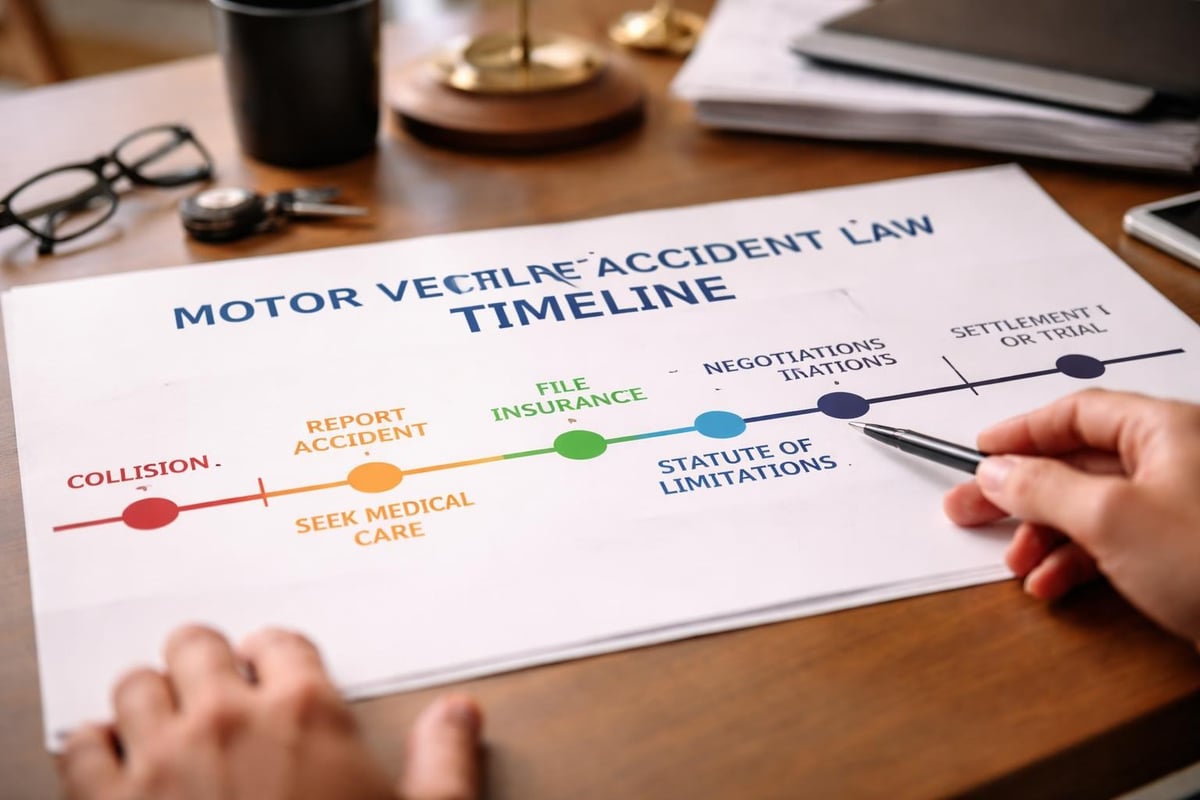
The claims process following a motor vehicle accident involves multiple stages, strict deadlines, and detailed documentation requirements. Understanding this process helps victims protect their rights and maximize compensation.
Initial Steps After a Collision
Immediately following an accident, specific actions strengthen your legal position. California law requires drivers involved in accidents causing injury, death, or property damage exceeding $1,000 to report the collision to the California Highway Patrol or local police within 24 hours.
Critical post-accident actions include:
- Seeking immediate medical attention (even for seemingly minor injuries)
- Documenting the accident scene with photographs and videos
- Collecting contact information from all parties and witnesses
- Reporting the collision to your insurance company
- Preserving all evidence, including damaged property and clothing
- Consulting with a personal injury attorney before providing recorded statements
Medical documentation proves particularly vital in motor vehicle accident claims. Many injuries, including whiplash, traumatic brain injuries, and internal damage, don’t manifest immediate symptoms. Delayed medical treatment allows insurance companies to argue injuries resulted from other causes, weakening your claim.
Time Limits and Legal Deadlines
California’s statute of limitations establishes strict deadlines for filing motor vehicle accident lawsuits. Victims typically have two years from the accident date to file personal injury claims and three years to file property damage claims. Missing these deadlines forever bars recovery, regardless of case merit.
Certain circumstances modify these standard timeframes:
- Government vehicles: Claims against government entities require filing administrative claims within six months
- Minor plaintiffs: The statute of limitations tolls until the victim’s 18th birthday
- Discovery rule: The deadline may extend when injuries aren’t immediately discoverable
- Defendant absence: Time periods pause when defendants leave California
Insurance Coverage in Motor Vehicle Accident Law
California’s mandatory insurance requirements form a crucial component of motor vehicle accident law. Understanding coverage types, policy limits, and claim procedures helps accident victims navigate the compensation process.
Minimum Coverage Requirements
California requires all drivers to carry minimum liability insurance covering:
| Coverage Type | Minimum Required | Purpose |
|---|---|---|
| Bodily Injury (per person) | $30,000 | Covers injuries to one individual |
| Bodily Injury (per accident) | $60,000 | Maximum for all injuries in one accident |
| Property Damage | $15,000 | Covers vehicle and property damage |
These minimum requirements frequently prove inadequate when serious injuries occur. A single emergency room visit following a moderate collision can exceed $15,000, leaving victims to pursue additional compensation through uninsured/underinsured motorist claims or personal lawsuits.
Uninsured and Underinsured Motorist Coverage
Uninsured motorist coverage protects accident victims when at-fault drivers lack insurance or carry insufficient coverage. This optional coverage in California provides essential protection given that approximately 15% of California drivers operate vehicles without required insurance.
UM/UIM coverage addresses:
- Accidents caused by uninsured drivers
- Hit-and-run collisions where perpetrators flee
- Situations where at-fault drivers carry insufficient coverage
- Injuries exceeding the at-fault driver’s policy limits
Many California residents don’t fully understand what uninsured motorist insurance covers, potentially missing opportunities for compensation. This coverage can prove invaluable when dealing with uninsured motorist claims that insurance companies may resist paying.
Dealing with Insurance Companies
Insurance companies operate as for-profit businesses focused on minimizing payouts. Understanding their tactics helps accident victims protect their interests during settlement negotiations.
Common insurance company strategies include:
- Offering quick, lowball settlements before victims understand their injury extent
- Requesting recorded statements to trap victims in inconsistent narratives
- Disputing medical treatment necessity or reasonableness
- Delaying claim processing to pressure victims into accepting less
- Denying valid claims hoping victims won’t pursue legal action
When insurance companies refuse to pay or offer unreasonable settlements, victims may need to escalate their claims through bad faith lawsuits or litigation. Having experienced legal representation often dramatically increases settlement offers.
Damages Available Under Motor Vehicle Accident Law
Motor vehicle accident law allows victims to recover various damage categories designed to make them whole after collisions. Understanding available compensation types helps victims pursue full and fair recovery.
Economic Damages
Economic damages compensate for measurable financial losses resulting from accidents. These damages include specific, calculable amounts with supporting documentation.
Common economic damages in motor vehicle accident cases:
- Medical expenses: Emergency treatment, hospitalization, surgery, rehabilitation, medication, medical devices, and future medical care
- Lost wages: Income lost during recovery, including salary, bonuses, commissions, and self-employment income
- Lost earning capacity: Reduced ability to earn future income due to permanent disabilities
- Property damage: Vehicle repair or replacement costs, personal property loss
- Out-of-pocket expenses: Transportation to medical appointments, home modifications, domestic assistance
California law allows recovery for all reasonable and necessary medical treatment. Insurance companies often dispute treatment necessity, particularly for chiropractic care, pain management, or mental health counseling following accidents.
Non-Economic Damages
Non-economic damages compensate for subjective, intangible losses that don’t carry specific price tags. These damages recognize that accident impacts extend beyond financial harm.
| Damage Type | Description | Factors Affecting Value |
|---|---|---|
| Pain and suffering | Physical discomfort and distress | Injury severity, treatment duration, permanent impairment |
| Emotional distress | Psychological trauma, anxiety, depression | Mental health diagnoses, therapy records, impact on daily life |
| Loss of enjoyment | Inability to pursue hobbies and activities | Age, pre-accident lifestyle, permanence of limitations |
| Disfigurement | Scarring and physical alterations | Visibility, location, psychological impact |
| Loss of consortium | Impact on spousal relationships | Marriage quality, injury permanence, age of spouses |
Pain and suffering settlements vary dramatically based on injury severity, treatment length, and permanent impairment. California doesn’t cap non-economic damages in motor vehicle accident cases, though caps apply to medical malpractice claims.
Punitive Damages
Punitive damages punish defendants for particularly egregious conduct and deter similar behavior. California law allows punitive damages when defendants act with malice, oppression, or fraud. Drunk driving accidents frequently justify punitive damages, as do cases involving intentional misconduct.
The Role of Legal Representation in Motor Vehicle Accident Law
Navigating motor vehicle accident law without experienced legal counsel puts victims at a significant disadvantage. Insurance companies employ teams of adjusters and attorneys protecting their interests; victims deserve equal representation.
Benefits of Hiring an Attorney
Professional legal representation provides multiple advantages in motor vehicle accident cases. Attorneys handle complex legal procedures, investigate collision circumstances, calculate full damage values, and negotiate with insurance companies from positions of strength.
Key attorney contributions include:
- Conducting thorough accident investigations using expert resources
- Preserving critical evidence before it disappears
- Identifying all potentially liable parties and insurance policies
- Accurately valuing claims including future damages
- Managing all communications with insurance adjusters
- Filing necessary paperwork within strict deadlines
- Representing clients in settlement negotiations or trial
Studies consistently show that accident victims represented by attorneys recover significantly higher compensation than unrepresented claimants. Even after paying attorney fees, represented victims typically net more than those who handle claims independently.
Choosing the Right Motor Vehicle Accident Attorney
Not all personal injury attorneys possess equal experience or dedication. Selecting a qualified car accident lawyer requires researching credentials, experience, and reputation.
Important selection criteria include:
- Specialization in motor vehicle accident law: General practitioners lack specific expertise
- Trial experience: Willingness to litigate increases settlement leverage
- Resources for investigation: Access to accident reconstructionists, medical experts, and investigators
- Communication practices: Regular updates and accessibility matter
- Fee structure: Most personal injury attorneys work on contingency, charging fees only if they recover compensation
Be wary of attorneys who advertise heavily without demonstrating case results. Billboard lawyers in Los Angeles may refer cases to other firms rather than personally handling them.
Settlement Versus Trial in Motor Vehicle Accident Cases
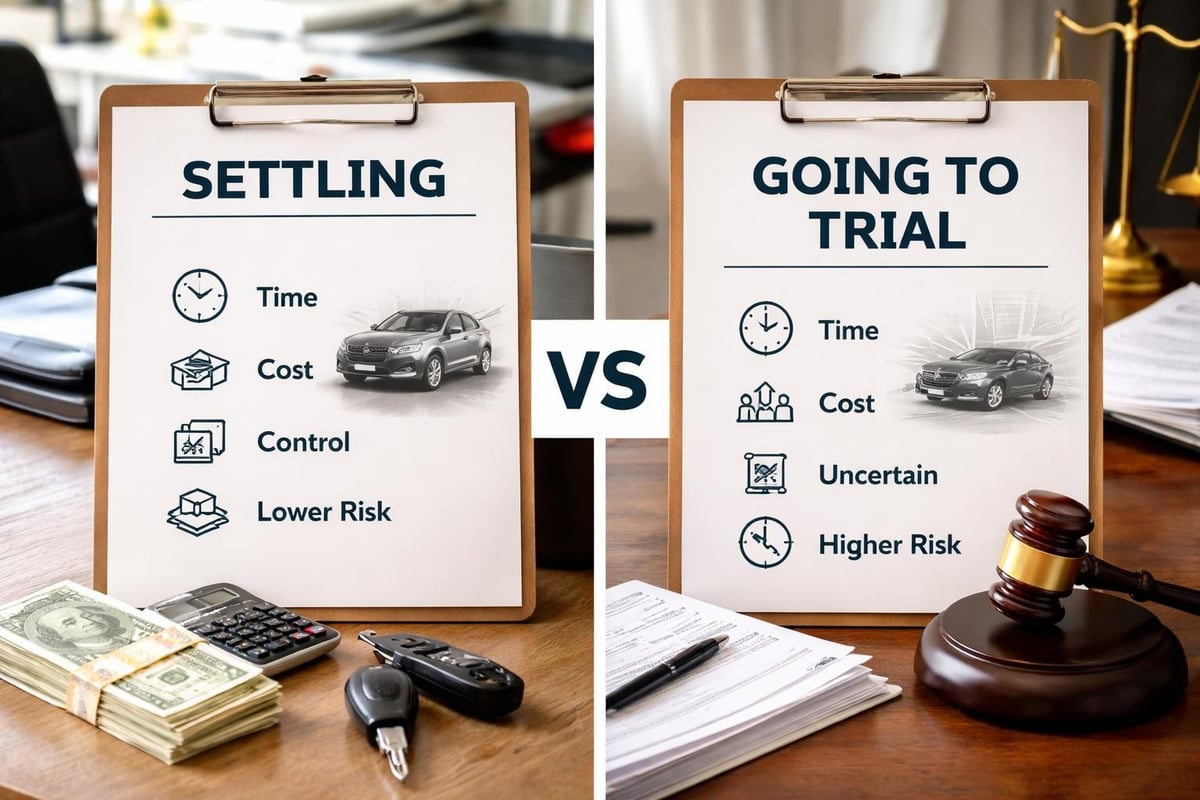
Most motor vehicle accident cases resolve through settlement negotiations rather than trial verdicts. Understanding the advantages and disadvantages of each resolution path helps victims make informed decisions about their cases.
The Settlement Process
Settlement negotiations typically begin after victims complete medical treatment or reach maximum medical improvement. Attorneys present demand packages documenting injuries, treatment, damages, and liability to insurance companies.
Settlement advantages:
- Faster resolution and quicker compensation receipt
- Lower legal costs and expenses
- Certainty of outcome without trial risk
- Privacy protection (settlements typically include confidentiality clauses)
- Reduced stress compared to trial proceedings
Settlement disadvantages:
- Potentially lower compensation than trial verdicts
- No public accountability for defendant wrongdoing
- Finality preventing future claims if conditions worsen
- No precedent-setting for similar cases
When evaluating settlement offers, victims should consider total damages including future medical needs, permanent impairment impacts, and non-economic losses. Initial offers typically represent small fractions of claim value, requiring skilled negotiation to reach fair compensation.
Going to Trial
When settlement negotiations fail to produce adequate offers, going to trial may secure greater compensation. Trials involve presenting evidence to judges or juries who determine liability and award damages.
Trial proceedings follow structured processes:
- Jury selection: Attorneys question potential jurors to identify biases
- Opening statements: Each side outlines their case theory
- Plaintiff’s case: Victim presents evidence, witnesses, and expert testimony
- Defense case: Defendant presents contrary evidence and witnesses
- Closing arguments: Attorneys summarize evidence and argue for their positions
- Jury deliberation: Jurors discuss evidence and reach verdicts
- Verdict and judgment: Jury announces decisions on liability and damages
Trials carry risks including potential defense verdicts, lower-than-expected damage awards, and appeals that delay final resolution. However, successful trials can result in substantial verdicts that significantly exceed settlement offers, particularly when cases involve severe injuries or clear defendant fault.
Special Considerations in California Motor Vehicle Accident Law
California’s motor vehicle accident law includes unique provisions and considerations that distinguish it from other states. Understanding these California-specific elements helps residents navigate local legal requirements.
Pure Comparative Negligence
California follows pure comparative negligence, allowing accident victims to recover damages even when they bear substantial fault for collisions. Unlike modified comparative negligence states that bar recovery when plaintiffs exceed 50% or 51% fault, California permits recovery at any fault percentage.
This system creates both opportunities and challenges. Victims who share fault can still pursue claims, but must accept proportional damage reductions. Defense attorneys aggressively argue plaintiff fault to minimize their clients’ liability, making skilled legal representation crucial for protecting damage awards.
Proposition 213 Limitations
California’s Proposition 213 limits non-economic damage recovery for uninsured drivers involved in motor vehicle accidents. Drivers operating without required insurance cannot recover pain and suffering damages, even when other drivers caused their injuries.
This law creates significant financial consequences for uninsured motorists:
- Economic damages (medical bills, lost wages) remain recoverable
- Non-economic damages (pain, suffering, emotional distress) are barred
- Exception exists for drunk driving accidents caused by intoxicated defendants
Proposition 213 emphasizes the importance of maintaining required insurance coverage. The law applies regardless of fault, punishing uninsured victims even when other drivers bear 100% responsibility for collisions.
Government Liability Limitations
Motor vehicle accidents involving government vehicles or employees face special procedural requirements under the California Tort Claims Act. Victims must file administrative claims with appropriate government agencies within six months of accidents, significantly shorter than standard two-year personal injury deadlines.
Government liability claims involve unique challenges:
- Shortened filing deadlines with strict enforcement
- Sovereign immunity defenses limiting government liability
- Damage caps restricting compensation amounts
- Complex procedural requirements for claim presentation
- Potential need to exhaust administrative remedies before filing lawsuits
Missing the six-month administrative claim deadline typically bars recovery, regardless of case merit. Consulting attorneys immediately after accidents involving government vehicles protects victims’ rights.
Common Mistakes in Motor Vehicle Accident Claims
Understanding and avoiding common errors helps accident victims protect their legal rights and maximize compensation. Many mistakes prove difficult or impossible to remedy once made.
Critical Errors to Avoid
Admitting fault at accident scenes represents one of the most damaging mistakes. Even apologizing can be construed as liability admission. Limit communications to factual information exchanges required by law, leaving fault determinations to investigators and attorneys.
Other frequent mistakes include:
- Delaying medical treatment, allowing insurers to question injury causation
- Providing recorded statements to insurance adjusters without attorney advice
- Posting about accidents or injuries on social media platforms
- Accepting initial settlement offers without understanding full injury extent
- Missing filing deadlines or procedural requirements
- Signing medical authorizations granting unlimited record access
- Failing to document accident scenes, injuries, and recovery processes
Social media presents particular dangers in modern motor vehicle accident claims. Insurance companies monitor plaintiff social media accounts seeking inconsistencies with claimed injuries. Photographs showing physical activities, vacation trips, or social events can be used to argue injuries aren’t as severe as claimed, even when posts misrepresent actual circumstances.
The Importance of Documentation
Thorough documentation strengthens motor vehicle accident claims by providing objective evidence supporting injury severity, treatment necessity, and damage amounts. Maintaining detailed records throughout treatment and recovery processes helps counter insurance company disputes.
Essential documentation includes:
- Accident reports: Police reports, incident documentation, collision diagrams
- Photographic evidence: Accident scenes, vehicle damage, visible injuries, healing progression
- Medical records: Emergency treatment, diagnostic tests, treatment plans, therapy notes
- Financial documentation: Medical bills, wage statements, expense receipts
- Communication logs: Insurance correspondence, adjuster conversations, claim status updates
- Impact statements: Daily journals documenting pain levels, activity limitations, emotional struggles
Many accident victims struggle to appreciate documentation importance until disputes arise. Starting comprehensive record-keeping immediately after accidents provides crucial evidence supporting full compensation recovery.
Motor vehicle accident law protects collision victims’ rights while establishing frameworks for fair compensation and accountability. Whether dealing with straightforward rear-end collisions or complex multi-vehicle accidents, understanding your legal rights and options proves essential for securing just outcomes. When you’ve been injured in a motor vehicle accident, experienced legal guidance can make the difference between inadequate settlements and full recovery. Steven M Sweat, Personal Injury Lawyers, APC has served Los Angeles accident victims for years, providing dedicated representation that puts clients’ interests first. Contact our team today for a free case evaluation and discover how we can help you navigate motor vehicle accident law while focusing on your recovery.