- Free Consultation: 866-966-5240 Tap Here To Call Us











Uber Personal Injury Lawyer: 2026 Legal Guide


Rideshare services have transformed urban transportation, but with millions of trips completed daily, accidents involving Uber vehicles have become increasingly common. When you’re injured in an Uber accident, understanding your legal rights and the complex insurance landscape becomes critical. An uber personal injury lawyer specializes in navigating the unique challenges these cases present, from determining liability among multiple parties to dealing with corporate insurance policies that can exceed $1 million. Whether you were a passenger, pedestrian, or another driver involved in a collision with an Uber vehicle, knowing when and how to seek legal representation can significantly impact your recovery and compensation.
Understanding Uber Accident Liability in California
Determining who is responsible for an Uber accident involves multiple layers of complexity that differ significantly from standard car accident cases. The liability question hinges on several factors, including the driver’s status at the time of the accident, the actions of other drivers, and potential vehicle defects.
The Three Phases of Uber Coverage
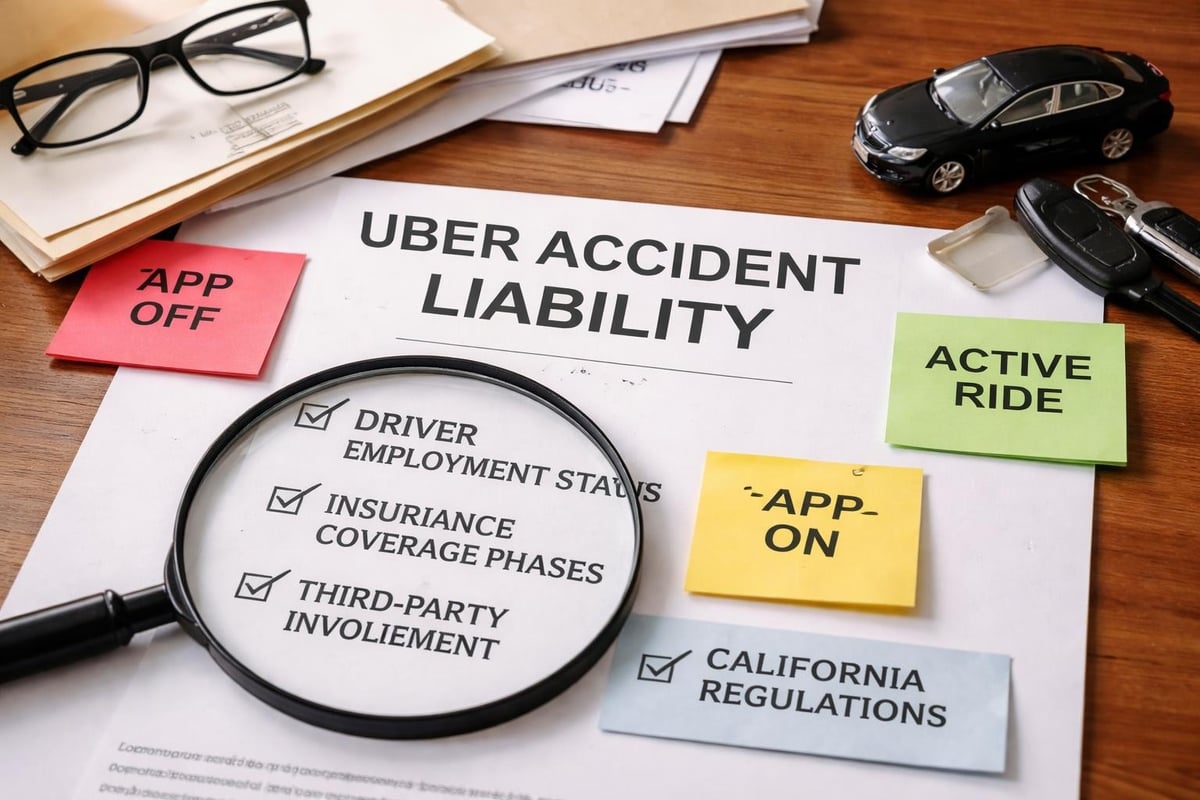
Uber’s insurance coverage operates in distinct phases that directly affect your claim. When a driver has the app turned off, their personal auto insurance applies. Once the app is on but no ride is requested, Uber provides contingent liability coverage of $50,000 per person and $100,000 per accident for bodily injury. During an active ride (from passenger pickup to drop-off), Uber maintains $1 million in liability coverage plus uninsured/underinsured motorist protection.
Understanding California’s rideshare insurance requirements becomes essential when building your case. An uber personal injury lawyer can determine which phase applied during your accident and identify all available insurance policies.
Key liability parties in Uber accidents include:
- The Uber driver who may have been negligent
- Other motorists who contributed to the collision
- Uber Technologies Inc. under certain circumstances
- Vehicle manufacturers if a defect caused the accident
- Property owners if road conditions contributed
When Uber Can Be Held Directly Liable
While Uber typically classifies drivers as independent contractors, recent legal developments have expanded scenarios where the company faces direct liability. Cases involving inadequate background checks, failure to maintain proper insurance, or negligent hiring practices have successfully held Uber accountable.
California courts have also examined whether Uber’s control over drivers through app technology, pricing, and rider matching creates an employment relationship. This determination can dramatically affect compensation limits and the parties responsible for your injuries.
Common Injuries in Uber Accidents
Rideshare accidents produce injury patterns similar to other motor vehicle collisions, but certain factors like urban driving conditions and frequent stops increase specific risk types. Recent rideshare accident statistics reveal concerning trends about injury severity and frequency.
| Injury Type | Common Severity | Treatment Duration | Average Impact |
|---|---|---|---|
| Whiplash/Neck Injuries | Mild to Moderate | 3-12 months | Lost work, ongoing pain |
| Traumatic Brain Injuries | Moderate to Severe | 6 months to lifetime | Cognitive changes, disability |
| Spinal Cord Damage | Severe | Permanent | Paralysis, major life changes |
| Broken Bones | Moderate | 2-6 months | Surgery, rehabilitation |
| Soft Tissue Injuries | Mild to Moderate | 1-6 months | Chronic pain, limited mobility |
Delayed Symptom Recognition
Many Uber accident victims don’t immediately recognize their injuries. Adrenaline and shock can mask symptoms for hours or even days after a collision. An uber personal injury lawyer will advise you to seek medical attention immediately, even if you feel fine, because delayed documentation can weaken your claim.
Soft tissue injuries, concussions, and internal bleeding often present symptoms gradually. Medical records created within 72 hours of the accident carry significant weight in establishing causation between the collision and your injuries.
The Claims Process for Uber Accidents
Filing a personal injury claim after an Uber accident follows a structured process, but the involvement of multiple insurance companies creates unique complications. Most victims benefit from legal guidance through each stage.
Initial Steps After an Uber Accident
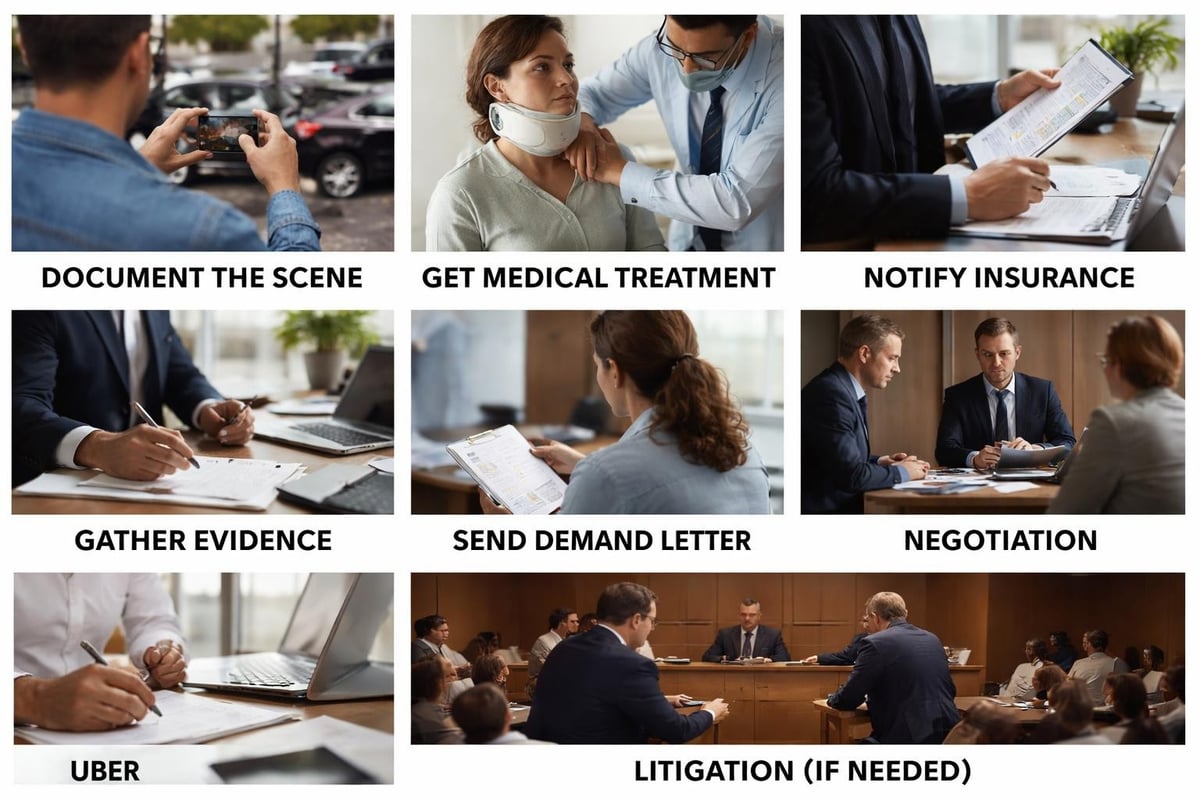
Immediate actions at the accident scene:
- Call 911 to report the accident and request medical assistance
- Document the scene with photos and videos
- Collect the Uber driver’s information and insurance details
- Obtain contact information from witnesses
- Request a copy of the police report
- Save your Uber trip receipt and ride details
Never admit fault or make recorded statements to insurance adjusters without legal counsel. Insurance companies often contact victims within hours, seeking statements that can later undermine claims. An uber personal injury lawyer can handle these communications and protect your interests.
Navigating Multiple Insurance Policies
Uber accidents typically involve at least two insurance policies: the driver’s personal coverage and Uber’s commercial policy. Third-party drivers may add additional insurers to the mix. Each company will attempt to minimize its liability by shifting responsibility to other parties.
Determining the proper claims sequence requires understanding California’s rideshare liability laws and policy coordination rules. Your attorney will file claims strategically to maximize available coverage and prevent insurers from denying responsibility through policy gaps.
The investigation phase involves gathering evidence including:
- Uber trip data and GPS records
- Vehicle maintenance histories
- Driver background and training records
- Accident reconstruction analysis
- Medical documentation and expert opinions
- Economic loss calculations
Calculating Damages in Uber Injury Cases
Comprehensive damage calculation ensures you receive fair compensation for all accident-related losses. An uber personal injury lawyer evaluates both economic and non-economic damages to build a complete claim.
Economic Damages
These quantifiable losses include medical expenses (emergency care, hospitalization, surgery, rehabilitation, medication, and future treatment), lost wages from missed work, reduced earning capacity if injuries cause permanent limitations, and property damage to personal belongings.
California law allows recovery of all reasonable medical expenses, including those covered by health insurance. The collateral source rule prevents defendants from reducing compensation based on insurance payments you’ve received.
Non-Economic Damages
Compensation for intangible losses covers:
- Physical pain and suffering
- Emotional distress and mental anguish
- Loss of enjoyment of life activities
- Disfigurement and scarring
- Loss of consortium for spouses
California doesn’t cap non-economic damages in most personal injury cases, allowing juries to award compensation based on injury severity and life impact. Experienced attorneys use proven valuation methods to establish appropriate non-economic damage amounts.
Comparative Negligence Considerations
California’s pure comparative negligence system allows recovery even if you share fault for the accident. Your compensation reduces by your percentage of responsibility. If you’re found 20% at fault in an accident causing $100,000 in damages, you’d recover $80,000.
Insurance companies aggressively argue comparative fault to reduce payouts. They might claim you weren’t wearing a seatbelt, distracted the driver, or contributed through other actions. Your uber personal injury lawyer counters these arguments with evidence demonstrating the defendant’s primary responsibility.
Why You Need Specialized Legal Representation
Uber accident cases present unique challenges that require specific expertise beyond general personal injury knowledge. The intersection of corporate policies, evolving rideshare regulations, and complex insurance structures demands specialized legal understanding.
Corporate Resources and Legal Teams
Uber maintains sophisticated legal departments and retains major law firms to defend against injury claims. These corporate attorneys focus on minimizing company liability and protecting shareholder interests. Without equally skilled representation, individual claimants face significant disadvantages in negotiations and litigation.
An uber personal injury lawyer levels the playing field by understanding corporate defense strategies and countering them effectively. They’ve handled similar cases and know how rideshare companies attempt to avoid responsibility.
Navigating Technology Evidence
Modern Uber accidents involve digital evidence that requires technical knowledge to obtain and interpret. Trip data, GPS logs, driver app interactions, and vehicle telematics provide crucial information about the accident circumstances.
Your attorney will issue preservation letters demanding Uber maintain relevant data and may require court orders to access proprietary information. They work with technology experts to analyze this evidence and establish key facts about driver behavior, speed, routing decisions, and app distraction.
Understanding Rideshare Industry Trends
The rideshare industry continues evolving, with emerging safety data influencing legal standards and regulatory requirements. Attorneys specializing in this area stay current on industry developments, safety studies, and regulatory changes affecting liability.
Recent comparative analyses of rideshare safety reveal patterns that strengthen certain claim arguments. Specialized lawyers incorporate this research into case strategy, demonstrating industry-wide safety failures or driver training inadequacies.
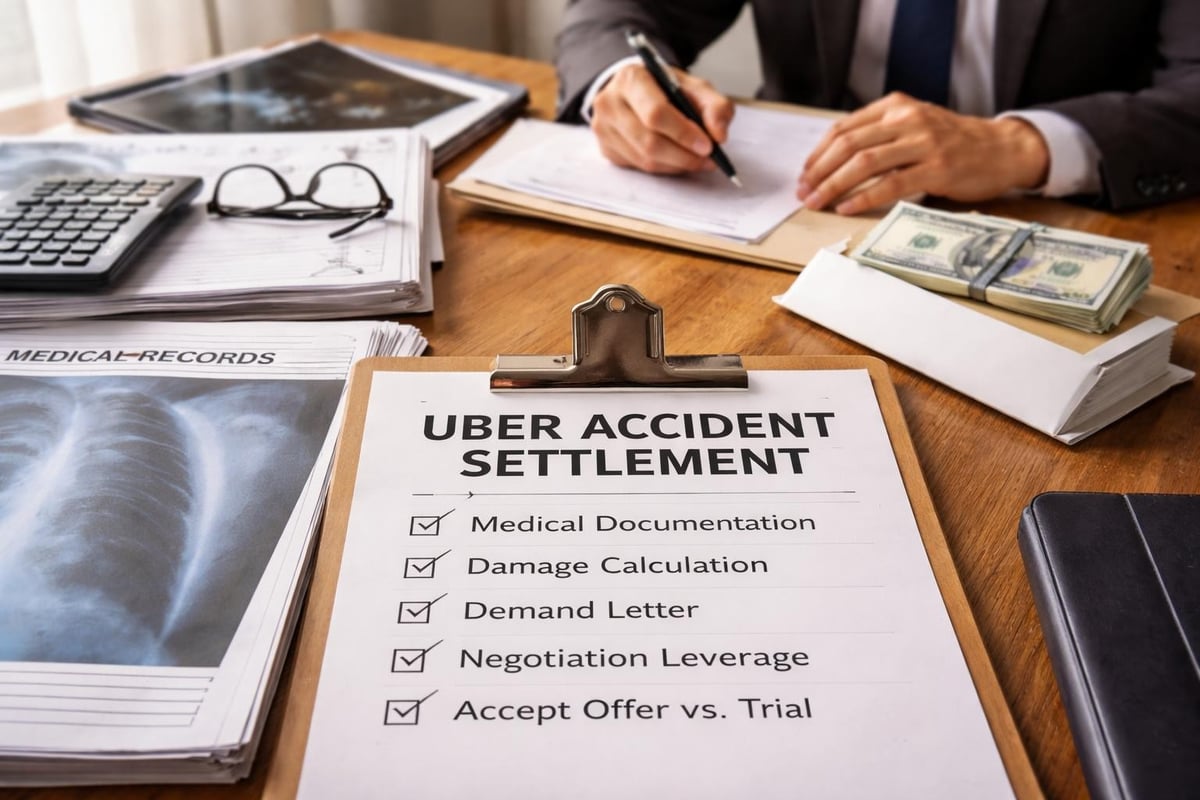
Settlement Negotiations vs. Litigation
Most Uber injury cases settle before trial, but achieving fair settlements requires credible litigation preparation. Understanding when to negotiate and when to file a lawsuit significantly impacts your final compensation.
The Settlement Timeline
Insurance negotiations typically begin after you complete medical treatment or reach maximum medical improvement. Settling before understanding your full injury extent often results in inadequate compensation that doesn’t cover future needs.
Standard settlement process stages:
- Demand letter: Your attorney sends detailed compensation demand with supporting evidence
- Initial response: Insurer typically offers substantially less than demanded
- Negotiation rounds: Multiple counteroffers with supporting arguments
- Mediation: Neutral third-party facilitates settlement discussions
- Final agreement: Parties reach mutually acceptable terms
This process typically takes 3-12 months, depending on case complexity and injury severity. Your uber personal injury lawyer maintains leverage throughout by demonstrating trial readiness.
When Litigation Becomes Necessary
| Settlement Advantages | Litigation Advantages |
|---|---|
| Faster resolution | Potential for higher awards |
| Lower legal costs | Access to discovery process |
| Guaranteed outcome | Public accountability |
| Privacy maintained | Precedent-setting potential |
| Reduced stress | Stronger negotiating position |
Filing a lawsuit doesn’t eliminate settlement possibilities. Most cases settle during litigation as both sides gain clearer pictures of case strengths and weaknesses through discovery. The key is having an attorney willing to try your case if necessary.
California’s statute of limitations generally allows two years from the accident date to file personal injury lawsuits. Missing this deadline typically bars your claim permanently, making early legal consultation essential. Understanding the personal injury claim process helps you take timely action.
Choosing the Right Uber Personal Injury Lawyer
Selecting appropriate legal representation directly affects your case outcome. Not all personal injury attorneys possess the specific knowledge and resources necessary for rideshare accident cases.
Essential Qualifications to Evaluate
Experience with rideshare cases specifically matters more than general personal injury experience. Ask potential attorneys about their Uber case history, settlement amounts achieved, and trial experience against rideshare companies and their insurers.
Key factors in attorney selection include:
- Proven track record with rideshare accident cases
- Resources to handle complex litigation against corporations
- Access to accident reconstruction and medical experts
- Clear communication about case strategy and expectations
- Contingency fee structure that aligns interests
Los Angeles attorneys like those at Steven M Sweat, Personal Injury Lawyers, APC understand California’s specific rideshare regulations and have established relationships with local experts who strengthen cases.
Understanding Fee Structures
Most uber personal injury lawyers work on contingency, meaning they receive payment only when you recover compensation. Standard contingency fees range from 33% to 40% of your settlement or verdict, with higher percentages applying to cases requiring trial.
This arrangement allows injury victims to access quality legal representation regardless of financial circumstances. Your attorney assumes the risk and advances case costs including expert fees, court filing fees, and investigation expenses.
The Consultation Process
Quality attorneys offer free initial consultations to evaluate your case and explain your options. During this meeting, discuss the accident circumstances, your injuries, and the attorney’s assessment of case value and challenge areas.
Prepare for your consultation by gathering accident reports, medical records, insurance correspondence, and a timeline of events. This information helps attorneys provide accurate case evaluations and strategy recommendations.
Protecting Your Rights After an Uber Accident
The actions you take immediately following an Uber accident can significantly strengthen or weaken your eventual claim. Understanding common mistakes helps you avoid pitfalls that reduce compensation.
What Not to Do After an Uber Accident
Insurance adjusters and defense attorneys look for reasons to deny or minimize claims. Certain actions provide ammunition for these efforts:
- Don’t give recorded statements to insurance companies without attorney guidance
- Avoid posting on social media about the accident or your activities
- Never sign medical releases allowing unlimited access to your health records
- Don’t accept quick settlement offers before understanding injury extent
- Avoid gaps in medical treatment that suggest injuries aren’t serious
Even seemingly innocent social media posts can be misinterpreted as evidence you’re not seriously injured. Insurers routinely monitor claimants’ online activities looking for contradictory evidence.
Documenting Your Recovery
Maintain detailed records throughout your recovery to support damage claims. Keep copies of all medical bills, prescription receipts, therapy notes, and doctor’s instructions. Document how injuries affect daily activities through a pain journal noting symptom changes and activity limitations.
Photograph visible injuries regularly to show progression and healing. Save receipts for out-of-pocket expenses related to your injuries, including transportation to medical appointments, medical equipment, and household help you required during recovery.
Coordination with Health Insurance
Your health insurance may cover initial medical treatment, creating liens against any settlement you receive. Your uber personal injury lawyer negotiates these liens to maximize your net recovery. Understanding how different insurance types interact protects you from unexpected reductions in your settlement.
Medical payment coverage through auto insurance provides additional resources for immediate treatment costs. Unlike health insurance, Med Pay typically doesn’t require repayment from settlements, making it valuable for covering deductibles and copayments.
Special Considerations for Different Victim Types
Uber accidents affect various parties differently, each facing unique legal considerations and compensation options. An uber personal injury lawyer tailors strategy to your specific situation as a passenger, pedestrian, or other motorist.
Passengers in Uber Vehicles
As a paying passenger, you generally weren’t responsible for the accident and benefit from strong legal protections. California law requires Uber maintain $1 million in liability coverage for passenger injuries during active trips.
Your claim may proceed against the Uber driver, other involved motorists, or both, depending on fault distribution. This often means multiple insurance policies are available to compensate your injuries, increasing total available coverage.
Passengers should know that Uber’s terms of service include arbitration clauses that may limit your right to jury trial. However, serious injury cases often fall outside these provisions, and attorneys can challenge arbitration enforceability.
Pedestrians and Cyclists
Vulnerable road users struck by Uber vehicles face particularly severe injuries. These cases often involve higher compensation due to injury severity and the victim’s complete lack of protection during impact.
Pedestrian cases require careful accident reconstruction to counter common defense arguments about jaywalking or inattention. Video evidence from dashcams, security cameras, and witnesses becomes crucial in establishing driver fault.
Other Motorists
If an Uber vehicle struck your car, you proceed much like any car accident claim but with the added complexity of Uber’s insurance structure. You’ll likely file claims against both the Uber driver’s insurance and Uber’s policy, depending on the driver’s active status.
Other motorist claims sometimes face arguments that you contributed to the accident through your own negligence. Comparative fault becomes a key issue requiring strong evidence of the Uber driver’s primary responsibility. Resources about choosing experienced car accident representation can help you understand the selection process.
Future of Rideshare Safety and Liability
The rideshare industry continues evolving, with technological advances and regulatory changes affecting accident liability and prevention. Understanding these trends helps frame current cases within the broader safety landscape.
Autonomous Vehicle Integration
Uber and competitors are testing autonomous vehicle technology that may eventually replace human drivers. Early safety comparisons between autonomous and human-driven vehicles show mixed results, with different accident patterns emerging.
Liability questions become more complex when software rather than humans control vehicles. Product liability theories may replace negligence claims, shifting responsibility to vehicle manufacturers and software developers. These changes will require new legal strategies as the technology matures.
Enhanced Safety Features
Modern vehicles include advanced driver assistance systems (ADAS) that can prevent or mitigate accidents. Features like automatic emergency braking, lane departure warnings, and blind spot monitoring are becoming standard in rideshare fleets.
When these systems fail or drivers ignore warnings, liability arguments incorporate technology misuse or malfunction. Your uber personal injury lawyer examines whether available safety features were properly functioning and whether the driver responded appropriately to system alerts.
Regulatory Developments
California continues refining rideshare regulations based on accident data and industry evolution. Recent legislative efforts have addressed driver training requirements, vehicle safety standards, and insurance coverage minimums.
These regulatory changes can affect how liability is determined and what compensation victims can recover. Staying current on legal developments ensures your case incorporates the most favorable applicable standards.
Working with Medical Providers During Your Case
The relationship between legal claims and medical treatment requires careful coordination to protect both your health and your case. An uber personal injury lawyer helps navigate this intersection effectively.
Treatment on Liens
Many injury victims lack health insurance or face high deductibles that make immediate treatment difficult. Medical providers sometimes agree to treat accident victims on a lien basis, accepting payment from eventual settlements rather than requiring upfront payment.
Your attorney maintains relationships with medical providers who understand personal injury cases and provide appropriate documentation for legal purposes. This ensures you receive necessary care while building medical records that support your compensation claims.
Independent Medical Examinations
Insurance companies often request independent medical examinations (IMEs) to evaluate injury severity and treatment necessity. Despite the “independent” label, these examiners typically favor insurance company positions.
Your uber personal injury lawyer prepares you for IMEs and reviews reports for inaccuracies or bias. When IME findings contradict your treating physicians, your attorney presents evidence explaining why your doctors’ opinions deserve greater weight.
Life Care Planning
Severe injuries requiring ongoing treatment benefit from professional life care planning. These experts project future medical needs and costs, ensuring settlement demands account for lifetime care requirements.
Life care plans become particularly important in cases involving traumatic brain injuries, spinal cord damage, or conditions requiring repeated surgeries. They prevent settling for amounts that seem substantial initially but prove inadequate over time.
Navigating an Uber accident claim requires understanding complex insurance structures, liability determinations, and strategic legal approaches that protect your rights throughout the process. The specialized knowledge an uber personal injury lawyer brings can mean the difference between inadequate settlements and comprehensive compensation that truly addresses your needs. If you’ve been injured in a rideshare accident, Steven M Sweat, Personal Injury Lawyers, APC provides the experienced representation Los Angeles victims need to hold negligent parties accountable and secure the compensation you deserve.