- Free Consultation: 866-966-5240 Tap Here To Call Us












Accident Car Lawyer: Your Guide to Legal Representation


When a vehicle collision disrupts your life, choosing the right legal representation becomes critical to protecting your rights and securing fair compensation. An accident car lawyer specializes in navigating the complex intersection of personal injury law, insurance regulations, and liability determination that follows automotive crashes. These legal professionals understand the unique challenges collision victims face, from mounting medical bills to lost wages and long-term rehabilitation needs. Whether you’ve experienced a minor fender-bender or a catastrophic multi-vehicle crash, understanding how specialized legal counsel can advocate for your interests makes all the difference in achieving a favorable outcome.
Understanding the Role of an Accident Car Lawyer
An accident car lawyer provides specialized legal services designed specifically for individuals injured in vehicular collisions. These attorneys focus exclusively on representing crash victims rather than insurance companies or at-fault drivers, creating an adversarial position that benefits your claim.
The primary responsibilities include investigating crash circumstances, gathering evidence, negotiating with insurance adjusters, and pursuing litigation when necessary. Many accident cases involve disputed liability, where multiple parties claim innocence or where insurance companies attempt to minimize payouts through various tactics.
Key functions of specialized collision attorneys include:
- Conducting independent accident reconstruction analysis
- Obtaining police reports, witness statements, and surveillance footage
- Calculating comprehensive damages including future medical needs
- Communicating with all insurance providers on your behalf
- Filing legal documents within strict statutory deadlines
- Representing you during settlement negotiations and trial proceedings

Determining When You Need Legal Representation
Not every automotive collision requires hiring an accident car lawyer. Minor crashes with no injuries, clear liability, and cooperative insurance companies may resolve smoothly through direct claims. However, several circumstances demand professional legal intervention.
Serious injuries that require hospitalization, surgery, or extended recovery periods justify legal representation. The legal process as a car accident victim can become overwhelming when dealing with medical treatment simultaneously, making professional advocacy essential.
Situations that warrant hiring specialized counsel:
- Severe or permanent injuries requiring ongoing medical care
- Disputed liability where multiple parties share potential fault
- Insufficient insurance coverage from at-fault drivers
- Complex multi-vehicle collisions involving commercial entities
- Insurance company bad faith tactics or settlement denial
California operates under a fault-based insurance system, meaning the responsible party’s insurance should cover damages. This differs from no-fault car insurance states, where your own policy pays regardless of who caused the crash.
The Legal Process Following Vehicle Collisions
Understanding the timeline of a personal injury case helps set realistic expectations about case duration and complexity. Most collision claims follow a predictable sequence, though individual circumstances create variations.
The initial consultation typically occurs within days of the crash. During this meeting, an accident car lawyer evaluates your case merits, explains your legal options, and outlines the anticipated process. This consultation should be free, with no obligation to hire the attorney.
Investigation and Evidence Collection
Once retained, your attorney immediately begins preserving crucial evidence. Vehicle collisions generate time-sensitive information that can disappear quickly-surveillance footage gets overwritten, witnesses’ memories fade, and physical evidence deteriorates.
Professional legal teams often employ accident reconstruction specialists who analyze skid marks, vehicle damage patterns, and road conditions. Proving fault in a car accident case requires concrete evidence rather than subjective statements.
| Evidence Type | Purpose | Collection Timeline |
|---|---|---|
| Police reports | Establishes official crash narrative | Within 7-10 days |
| Medical records | Documents injury severity and treatment | Ongoing throughout care |
| Witness statements | Provides independent crash observations | Within 2-3 weeks |
| Photographic evidence | Preserves scene and damage conditions | Immediately after crash |
| Expert analysis | Reconstructs collision mechanics | 30-60 days post-crash |
Your attorney also requests your complete medical records, employment documentation showing lost wages, and all communications with insurance companies. Understanding the legal process demonstrates how each piece of evidence contributes to establishing both liability and damages.
Demand Letters and Settlement Negotiations
After reaching maximum medical improvement-the point where doctors believe you’ve recovered as much as possible-your accident car lawyer calculates total damages. This comprehensive valuation includes economic losses like medical expenses and lost income, plus non-economic damages such as pain and suffering.
The demand letter formally notifies the insurance company of your claim and requested compensation amount. This document summarizes the crash facts, liability evidence, injury documentation, and legal justification for the settlement figure.
Effective demand letters typically include:
- Detailed accident narrative with supporting evidence
- Complete medical treatment timeline and prognosis
- Itemized economic damages with documentation
- Analysis of comparative negligence if applicable
- Legal precedents supporting damage calculations
- Specific settlement deadline for response
Insurance adjusters rarely accept initial demands. The negotiation phase involves counteroffers, additional documentation requests, and strategic positioning. An experienced attorney understands insurance company tactics and maintains leverage throughout these discussions.
Calculating Fair Compensation Values
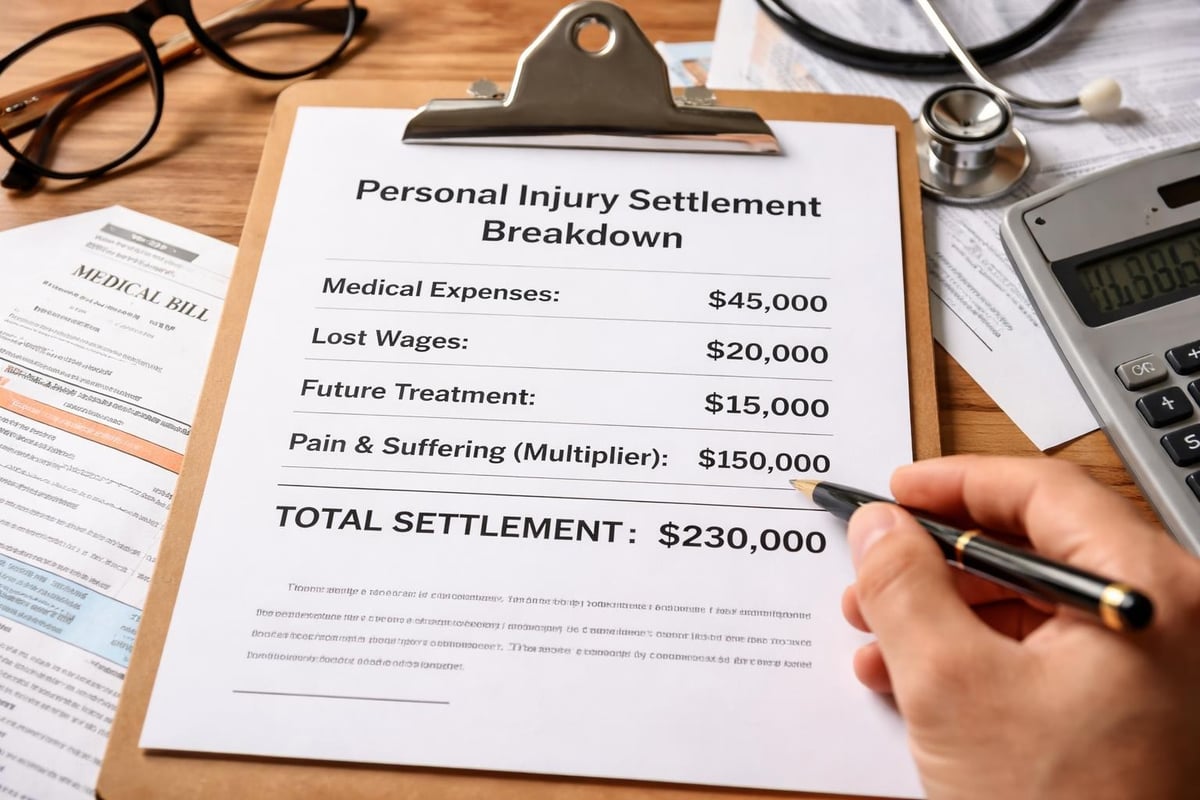
Determining appropriate settlement amounts requires sophisticated damage analysis beyond adding medical bills. An accident car lawyer evaluates both tangible and intangible losses to establish comprehensive compensation demands.
Economic damages represent quantifiable financial losses with documentary support. Medical expenses include emergency treatment, hospitalization, surgery, medication, physical therapy, and future care needs. Lost wages encompass missed work during recovery, reduced earning capacity, and lost business opportunities.
Non-Economic Damages Assessment
California allows recovery for subjective losses that significantly impact quality of life. Pain and suffering compensation addresses physical discomfort, emotional distress, anxiety, depression, and diminished life enjoyment following collisions.
Several methodologies calculate these damages. The multiplier method applies a factor (typically 1.5 to 5) to total economic damages based on injury severity. The per diem approach assigns daily values for pain experienced throughout recovery.
| Injury Severity | Typical Multiplier | Example Economic Damages | Pain & Suffering Range |
|---|---|---|---|
| Minor (soft tissue) | 1.5 – 2.0 | $5,000 | $7,500 – $10,000 |
| Moderate (fractures) | 2.0 – 3.5 | $25,000 | $50,000 – $87,500 |
| Severe (surgical) | 3.5 – 4.5 | $100,000 | $350,000 – $450,000 |
| Catastrophic (permanent) | 4.5 – 5.0+ | $500,000+ | $2,250,000+ |
Understanding pain and suffering settlement examples illustrates how courts and insurers value these intangible losses. Factors include injury permanence, treatment duration, age of the victim, and impact on daily activities.
Dealing With Insurance Companies
Insurance adjusters represent corporate interests focused on minimizing payouts. Without an accident car lawyer, you face significant disadvantages in these negotiations. Adjusters use various tactics to reduce claim values or deny liability entirely.
Common strategies include requesting unnecessary medical records to find pre-existing conditions, using your recorded statements against you, offering quick settlements before injury extent becomes clear, and disputing medical treatment necessity. They may also delay claim processing hoping financial pressure forces low settlements.
Protecting Your Rights During Claims
Never provide recorded statements to opposing insurance companies without legal counsel present. These recordings become permanent evidence used to undermine your claim. Similarly, avoid signing medical authorization forms allowing unlimited access to your health history.
Social media activity creates particular vulnerability. Insurance investigators routinely monitor claimants’ profiles seeking evidence contradicting injury claims. A photo showing you standing at a family gathering might be misrepresented as proof you’re not experiencing back pain.
Critical actions to protect your claim:
- Document all communications with insurance representatives
- Forward adjuster calls and letters to your attorney immediately
- Refuse to discuss crash details without counsel present
- Obtain written explanations for any claim denial
- Never accept initial settlement offers without legal review
When insurance companies refuse to pay or offer unreasonable settlements, litigation becomes necessary. Your attorney files a formal lawsuit, initiating court proceedings that often motivate insurers toward fair settlements.
Litigation and Trial Preparation
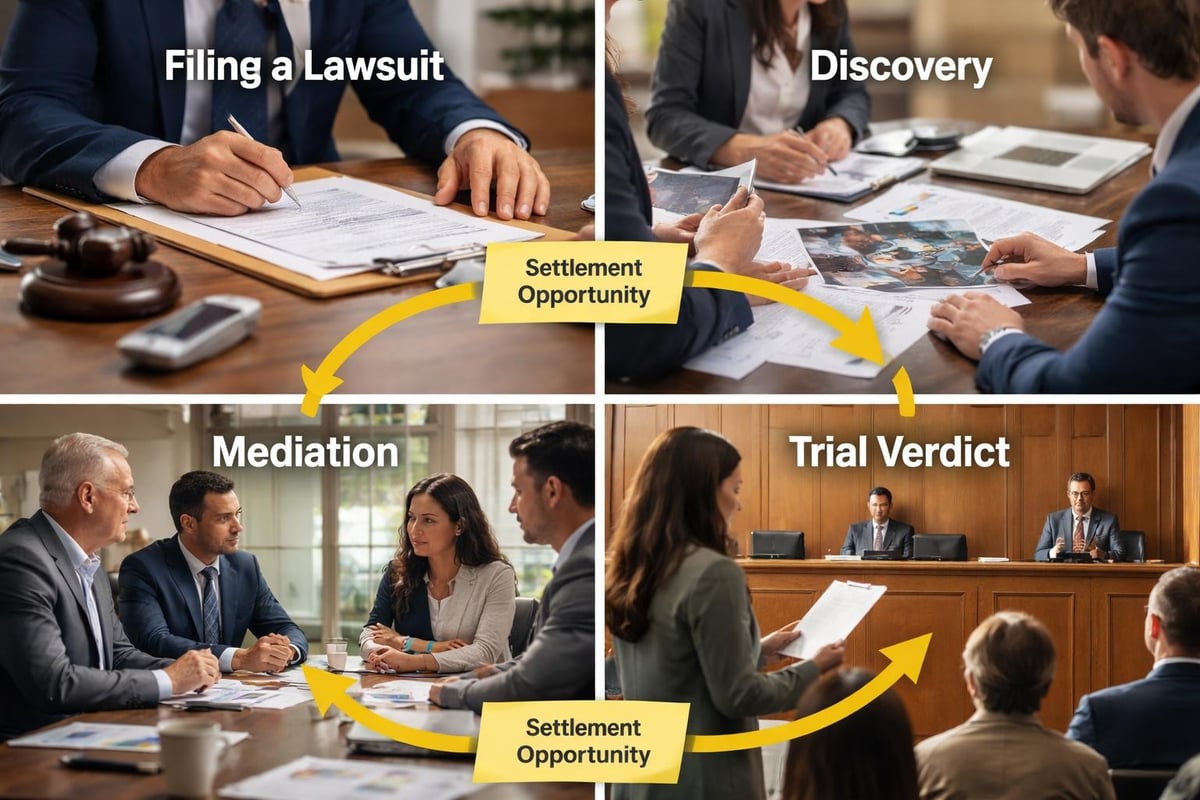
While most collision claims settle before trial, preparing for court strengthens negotiating position. An accident car lawyer begins trial preparation simultaneously with settlement negotiations, demonstrating readiness to pursue full litigation if necessary.
The discovery phase allows both sides to request evidence through interrogatories (written questions), depositions (sworn testimony), and document production. This formal process often reveals information strengthening your position or undermining defense arguments.
Understanding Trial Timelines
The typical legal process car accident case extends from several months to multiple years depending on complexity. Simple liability cases with clear evidence and cooperative insurance companies may settle within 3-6 months. Complex cases involving severe injuries, disputed fault, or multiple defendants often require 18-24 months or longer.
California’s statute of limitations generally provides two years from the crash date to file personal injury lawsuits. However, certain circumstances modify this deadline, making early legal consultation critical.
Trial preparation milestones include:
- Filing the complaint (initiates formal lawsuit)
- Defendant’s answer (responds to allegations, typically 30 days)
- Discovery period (evidence exchange, 6-12 months)
- Expert witness designation (identifies specialist testimony)
- Mediation attempts (court-ordered settlement conferences)
- Trial date setting (scheduled 12-18 months from filing)
Most cases settle during the discovery phase or at mandatory settlement conferences. Judges encourage resolution before trial, often facilitating negotiations between parties. However, having an attorney willing to proceed to verdict creates settlement leverage.
Choosing the Right Legal Representation
Selecting an accident car lawyer significantly impacts case outcomes and settlement values. Not all personal injury attorneys possess equal experience, resources, or track records handling vehicular collision claims.
Board certification, peer recognition, and specialized focus on automotive cases indicate expertise. Attorneys who handle various practice areas may lack the specific knowledge necessary for complex collision litigation. Finding the best car accident attorney requires evaluating multiple factors beyond advertising claims.
Evaluating Attorney Qualifications
Review potential attorneys’ case results, client testimonials, and professional credentials. Successful settlements and verdicts in cases similar to yours demonstrate capability handling your specific situation.
Essential qualifications to verify:
- Years practicing collision and personal injury law specifically
- Trial experience and willingness to litigate when necessary
- Resources for expert witnesses and accident reconstruction
- Transparent fee structures and cost explanations
- Communication style and case update frequency
- Professional memberships in trial lawyer associations
Most accident car lawyers work on contingency fee arrangements, collecting payment only when securing settlements or verdicts. Standard contingency rates range from 33% to 40% of recovery amounts, with percentages sometimes increasing if litigation becomes necessary.
Understanding personal injury attorney fees helps avoid surprises during the legal process. Reputable attorneys clearly explain all costs, including whether you’re responsible for case expenses if unsuccessful.
Common Collision Scenarios Requiring Legal Help
Certain crash types present unique legal challenges requiring specialized knowledge. An experienced accident car lawyer recognizes these complexities and adjusts strategies accordingly.
Rear-end collisions typically establish clear liability against the following driver. However, insurance companies sometimes argue sudden stops or brake light failures contributed to crashes, necessitating thorough investigation.
Multi-Vehicle and Chain Reaction Crashes
Complex accidents involving three or more vehicles create challenging liability determinations. California’s comparative negligence system allows recovery even when partially at fault, but damages reduce proportionally to your fault percentage.
Determining which driver initiated the chain reaction, whether weather conditions contributed, and how each collision occurred requires sophisticated accident reconstruction. These cases often involve multiple insurance companies, each attempting to shift liability elsewhere.
| Crash Type | Liability Challenges | Evidence Requirements |
|---|---|---|
| Intersection collisions | Right-of-way disputes | Traffic signals, witness accounts |
| Left-turn accidents | Yielding obligations | Sight distance analysis, photos |
| Lane change crashes | Blind spot arguments | Vehicle positions, signals used |
| Highway merging | Acceleration/deceleration duties | Traffic flow analysis, speeds |
Commercial vehicle involvement adds federal regulations and corporate liability considerations. Crashes with delivery trucks, buses, or rideshare vehicles may implicate employers under respondeat superior doctrine, potentially increasing available insurance coverage.
Uninsured and Underinsured Motorist Claims
California requires all drivers carry minimum liability insurance, yet many operate illegally without coverage. Others maintain only state minimums-$15,000 per person-inadequate for serious injury compensation.
When at-fault drivers lack sufficient insurance, your own uninsured/underinsured motorist (UM/UIM) coverage becomes critical. Understanding uninsured motorist coverage explains how these policies protect you from inadequately insured drivers.
Navigating UM/UIM Claims
Filing claims against your own insurance company creates unique dynamics. While your insurer owes contractual duties, they still aim to minimize payouts. An accident car lawyer ensures your carrier fulfills policy obligations rather than exploiting technical provisions.
UM/UIM claims require proving the at-fault driver’s negligence and demonstrating their insurance inadequacy. You cannot simply claim against your policy without establishing underlying liability.
UM/UIM claim requirements include:
- Evidence establishing other driver’s fault
- Documentation of their insurance limits
- Proof your damages exceed available coverage
- Timely notice to your insurance company
- Cooperation with your insurer’s investigation
These claims sometimes involve arbitration rather than court litigation. Your policy’s arbitration clause determines the dispute resolution process, making careful policy review essential.
Maximizing Your Claim Value
An experienced accident car lawyer employs strategic approaches that significantly increase settlement amounts compared to unrepresented claimants. Insurance companies recognize attorneys’ ability to effectively litigate, motivating higher settlement offers.
Complete medical documentation forms the foundation of valuable claims. Following prescribed treatment, attending all appointments, and documenting symptom progression demonstrates injury severity and treatment necessity.
Strategic Case Building Techniques
Timing settlement demands optimally impacts outcomes. Premature demands before reaching maximum medical improvement risk undervaluing future complications. Conversely, excessive delays may suggest injuries weren’t serious, weakening negotiating position.
Expert witnesses provide compelling testimony regarding crash mechanics, injury causation, and future care needs. Accident reconstructionists, medical specialists, vocational experts, and economists quantify damages courts and insurers find persuasive.
Professional legal teams also identify all potential defendants and insurance policies. Multi-party liability situations may involve vehicle manufacturers (product defects), government entities (road design), or property owners (visibility obstructions), expanding recovery sources.
For collisions occurring on major California routes, specialized knowledge proves valuable. Attorneys familiar with Pacific Coast Highway accidents or 110 Freeway crashes understand location-specific factors affecting liability and damages.
Settlement vs. Trial Considerations
Every accident car lawyer must advise clients regarding the critical decision between accepting settlement offers or proceeding to trial. Settling versus going to trial involves weighing certainty against potential higher awards and immediate payment against extended litigation.
Settlements provide guaranteed compensation without trial risks. Juries may find unexpectedly against you, award less than offered, or assign comparative fault reducing your recovery. Settlement also eliminates appeal possibilities and provides faster financial relief.
When Trial Makes Sense
Trial becomes advisable when settlement offers grossly undervalue claims or insurers refuse reasonable negotiations. Severe permanent injuries justifying substantial damages often warrant jury consideration, as jurors may award amounts exceeding insurance company offers.
Some cases present compelling facts that resonate with jurors-clear negligence, sympathetic injuries, or defendant misconduct. Skilled trial attorneys recognize when case facts create trial advantages outweighing settlement certainty.
Trial considerations include:
- Strength of liability evidence and witness credibility
- Severity and permanence of injuries sustained
- Defendant’s resources and insurance coverage limits
- Quality of medical documentation and expert opinions
- Jurisdictional tendencies in similar case verdicts
- Your financial ability to wait extended periods for resolution
Ultimately, clients make settlement decisions after receiving attorney counsel. An accident car lawyer provides objective analysis of risks and potential outcomes, but you control whether accepting offers or demanding trial.
Special Considerations for California Collisions
California’s unique legal landscape affects collision claims in ways requiring localized expertise. Community property laws, comparative negligence rules, and Los Angeles-specific traffic patterns influence case strategies.
California follows pure comparative negligence, allowing recovery even when 99% at fault, though damages reduce proportionally. This differs from modified comparative negligence states barring recovery beyond 50% fault.
Los Angeles Traffic Challenges
Greater Los Angeles traffic congestion creates collision patterns unseen elsewhere. Rush hour gridlock, aggressive driving, and complex freeway interchanges contribute to unique crash scenarios requiring specialized knowledge.
Rideshare accidents involving Uber and Lyft present particular challenges given these companies’ shifting insurance coverage depending on driver status. LAX rideshare accident claims demonstrate how airport proximity complicates liability determination and coverage questions.
Construction zones throughout LA County create additional hazards. California construction zone accidents may involve contractor liability beyond driver negligence, expanding potential defendants and recovery sources.
The two-year statute of limitations provides seemingly ample time, but evidence preservation and witness availability decline rapidly. Prompt legal consultation protects your rights and strengthens eventual claims through early investigation.
Taking Immediate Action After Collisions
The moments following a crash significantly impact future legal claims. While prioritizing medical treatment, certain actions preserve evidence and strengthen your position with insurers and courts.
Photograph all vehicles from multiple angles showing damage extent and final positions. Capture road conditions, traffic controls, sight obstructions, and weather conditions. These images become invaluable when memories fade and physical evidence disappears.
Critical post-collision steps include:
- Call emergency services for police documentation and medical care
- Exchange information with all drivers (insurance, contact, license)
- Document the scene through photos and written notes
- Identify witnesses and obtain contact information
- Seek medical evaluation even without apparent injuries
- Report to your insurer providing only basic factual information
- Consult an accident car lawyer before providing detailed statements
Never admit fault at crash scenes. Adrenaline masks injuries and shock clouds judgment about crash circumstances. Statements made immediately after collisions often misrepresent actual events, yet become binding admissions later.
Obtaining a free evaluation of personal injury claims allows professional assessment of your case merits without financial commitment. Initial consultations review crash facts, injury severity, and potential recovery amounts, helping you make informed decisions about pursuing legal action.
Navigating the aftermath of a vehicle collision demands specialized legal knowledge, strategic negotiation skills, and comprehensive understanding of California personal injury law. The right accident car lawyer transforms overwhelming circumstances into structured advocacy that protects your rights and maximizes recovery. If you’ve been injured in an automotive crash, Steven M Sweat, Personal Injury Lawyers, APC provides experienced representation throughout Los Angeles and surrounding areas, offering personalized attention and proven results for collision victims seeking the compensation they deserve.