Consistent Success
for Over 30 Years
for Over 30 Years






Steven M. Sweat, Personal Injury Lawyers, APC | 30+ Years Representing Grieving California Families
| Quick Answer A Los Angeles wrongful death lawyer represents surviving family members who lost a loved one due to another party’s negligence or wrongful act. California’s wrongful death statute is codified at Code of Civil Procedure §377.60, which establishes who may file a claim and what damages may be recovered. A separate but related survival action under CCP §377.30 allows the decedent’s estate to recover certain damages the decedent personally suffered before death. The general statute of limitations is two years from the date of death (CCP §335.1); claims against government entities require a written administrative claim within six months (Government Code §911.2). Steven M. Sweat has represented California wrongful death families for over 30 years and is recognized by Super Lawyers continuously since 2012. Free, confidential consultation 24/7: 866-966-5240. |
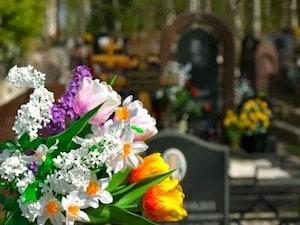
Losing a loved one to another person’s negligence is among the most devastating experiences a family can face. The grief is overwhelming. The financial uncertainty is paralyzing. And on top of all of that, families are forced to navigate a complex legal system with strict deadlines, demanding evidentiary requirements, and well-resourced insurance defense lawyers whose job is to minimize what your family recovers.
Steven M. Sweat, Personal Injury Lawyers, APC has represented surviving California families in wrongful death cases for more than 30 years. The firm handles these cases with the gravity they deserve — recognizing that no settlement or verdict can undo what was lost, but that pursuing every dollar of compensation available under California law is the only meaningful way to provide for the family the decedent left behind.
| 📞 Free, Confidential Consultation — No Fee Unless We Win Steven M. Sweat, Personal Injury Lawyers, APC | 11500 W. Olympic Blvd., Suite 400, Los Angeles, CA 90064 | Toll Free: 866-966-5240 | Los Angeles: 310-592-0445 | Available 24/7 | Se Habla Español | Serving Los Angeles, Orange, San Bernardino, Riverside, and Ventura Counties |
California law recognizes two distinct but related civil actions that may arise after a death caused by another party’s negligence. Both can — and often should — be filed simultaneously to maximize the family’s total recovery.
Under CCP §377.60, surviving family members may bring a wrongful death lawsuit against the person, business, or entity whose negligence, recklessness, or intentional misconduct caused the death of their loved one. This action compensates the surviving heirs for their own losses — the loss of financial support, the loss of love and companionship, the loss of guidance and counsel, and other harm the heirs personally suffered as a result of the death.
A wrongful death claim is entirely separate from any criminal prosecution arising out of the same death. A defendant can be acquitted of criminal charges and still be held liable in a civil wrongful death case. The civil burden of proof — preponderance of the evidence — is significantly lower than the criminal beyond-a-reasonable-doubt standard.
A survival action is a separate claim brought on behalf of the decedent’s estate, not the surviving heirs. It allows the estate to recover for certain damages the decedent personally suffered between the moment of injury and the moment of death — including medical expenses incurred during that period, lost earnings during that period, and property damage. For a step-by-step walkthrough of how the firm initiates these parallel claims, see our companion guide on the first steps for a California wrongful death claim.
| Important 2026 update: pain and suffering damages in survival actions From January 1, 2022 through January 1, 2026, California temporarily allowed survival actions to include damages for the decedent’s pre-death pain, suffering, and disfigurement under CCP §377.34(b) (added by SB 447). That temporary expansion sunset on January 1, 2026, and the California Legislature did not extend it. As of January 1, 2026, survival actions revert to the prior rule: damages are limited to the decedent’s economic losses (medical expenses, lost earnings, property damage) and any punitive damages the decedent would have been entitled to recover. Pain and suffering damages prior to death are no longer recoverable in the survival action itself. However, the surviving family’s own claims for loss of love, companionship, and consortium remain fully recoverable in the wrongful death claim under CCP §377.60. Cases filed before January 1, 2026 may still pursue pre-death pain and suffering damages under the prior version of CCP §377.34. The legal framework around survival actions is evolving — work with an attorney who is current on the post-sunset landscape. |
CCP §377.60 establishes a specific hierarchy of who may bring a wrongful death claim. The statute is strict — only certain people qualify, and the order matters.
| Tier | Persons Eligible to File |
| First | The decedent’s surviving spouse, domestic partner, children, and the issue (children) of any deceased child of the decedent |
| Second | If no Tier 1 heirs exist, persons who would be entitled to inherit by intestate succession under California law (typically parents, then siblings) |
| Additional | Putative spouses, stepchildren, and parents of the decedent if they were dependent on the decedent for at least 50% of their financial support |
| Other dependents | Other minors residing in the decedent’s household for at least 180 days before the death and dependent on the decedent for at least 50% of their support |
If multiple eligible heirs exist, California requires that they generally bring a single, joint wrongful death action — they cannot each file separate claims. Recovery is then divided among the heirs by agreement or court order based on their respective losses. This consolidation rule is important because it forces coordination among grieving family members at exactly the moment when grief and family conflict often combine to make coordination difficult. An experienced wrongful death attorney helps facilitate this process while protecting each heir’s interests.
California’s general statute of limitations for wrongful death claims is two years from the date of death under Code of Civil Procedure §335.1. However, several critical deadline shortenings apply:
These deadlines are unforgiving. Once the deadline passes, the claim is permanently barred. Contact an attorney as soon as practicable after a death — even if you are not yet sure whether you will pursue a claim.
Two parallel damages frameworks apply — one for the wrongful death claim itself, one for the survival action.
CCP §377.61 governs the damages recoverable by surviving heirs. These fall into two broad categories:
| Category | What It Compensates |
| Economic damages | Loss of the decedent’s financial support to the family, projected over the decedent’s expected working life and lifespan |
| Loss of household services the decedent would have provided (childcare, home maintenance, eldercare) | |
| Loss of gifts and benefits the heirs would reasonably have expected to receive | |
| Reasonable funeral and burial expenses | |
| Non-economic damages | Loss of love, companionship, comfort, care, assistance, protection, affection, society, and moral support |
| Loss of the enjoyment of sexual relations (for surviving spouses) | |
| Loss of the decedent’s training and guidance (especially significant for surviving minor children) |
Importantly, California wrongful death damages do NOT include the surviving family’s grief, sorrow, or mental anguish — only the loss of the relationship itself. This is a subtle but important distinction that some out-of-state attorneys miss.
Damages recoverable through the survival action, as of January 1, 2026, are limited to:
Punitive damages in particular can be substantial in cases involving DUI drivers, criminal conduct, or egregious corporate misconduct. They are uncapped in California except in medical malpractice cases governed by MICRA.
If the death resulted from medical malpractice, California’s Medical Injury Compensation Reform Act (MICRA), as amended in 2022, imposes a graduated cap on non-economic damages in wrongful death cases. As of January 1, 2023, the wrongful death cap began at $500,000 and increases by $50,000 each year, reaching $1,000,000 in 2033. The MICRA cap applies only to non-economic damages. Economic damages — loss of financial support, medical expenses, funeral costs — remain uncapped in malpractice cases.
Wrongful death case values vary enormously based on facts, available insurance, decedent’s earnings, venue, and the strength of the evidence. For data-grounded valuation analysis with current California verdict and settlement data, see the firm’s detailed guide on average wrongful death settlement values in California.
In broad terms, California wrongful death cases generally fall into three tiers:
| Tier | Typical Range | Common Characteristics |
| Lower tier | Under $500,000 | Minimum-limits insurance, decedent with limited earnings, contested liability, comparative fault by decedent |
| Mid tier | $500,000 – $3,000,000 | Adequate insurance coverage, working-age decedent, clear liability, documented economic and non-economic losses |
| High tier / catastrophic | $3,000,000 – $20,000,000+ | Breadwinner decedent with strong earnings record, clear and aggravated liability (DUI, gross negligence, corporate misconduct), substantial insurance or financially solvent corporate defendant, multiple surviving heirs |
These ranges are general benchmarks. The actual value of any specific case depends on the file — the medical records, the police report, the insurance situation, the defendant’s identity, and the procedural posture. A 30-minute free consultation produces a case-specific assessment.
Steven M. Sweat, Personal Injury Lawyers, APC handles wrongful death cases across the full spectrum of California negligence-based claims:
The largest single category of California wrongful death cases arises from motor vehicle collisions. The firm handles fatal car accidents, fatal commercial truck collisions (which involve federal motor carrier regulations and corporate defendants with substantial insurance coverage), and fatal motorcycle crashes (which present specific liability and bias issues). Critical factors include identifying every responsible party — the at-fault driver, their employer if working at the time, the vehicle owner, the manufacturer if a defect contributed, and government entities responsible for dangerous roadway conditions.
Los Angeles County records the highest pedestrian fatality rate in California. Fatal pedestrian and bicycle cases often involve catastrophic injuries from initial impact, multi-vehicle scenarios, hit-and-run drivers (where uninsured motorist coverage becomes the primary recovery source), and government-entity liability for dangerous crosswalks, missing signals, or inadequate lighting.
Fatal falls, drownings, fires, electrocutions, and assaults caused by inadequate property security or maintenance fall under California Civil Code §1714 and related premises liability law. Apartment building owners, hotel and resort operators, restaurants, retail stores, and event venues all owe duties of reasonable care to lawful visitors. Inadequate security cases — wrongful deaths arising from a property owner’s failure to provide reasonable security in the face of foreseeable criminal activity — are a particularly important and underutilized category in California.
California workplace fatalities involve a complex interplay between workers’ compensation (which covers employer liability) and third-party tort claims (which preserve full tort damages against non-employer defendants). The firm investigates every potential third-party defendant — equipment manufacturers, subcontractors, property owners, and others — to maximize the family’s total recovery beyond the workers’ compensation death benefits.
Deaths caused by police misconduct, jail and detention facility negligence, dangerous public roadways, and other government conduct require strict compliance with the six-month government tort claim deadline under Government Code §911.2. The firm has substantial experience with the procedural complexities of California government tort claims and the parallel federal civil rights claims (42 U.S.C. §1983) that often accompany them. For more on this specialized area, see our page on California police misconduct injury and wrongful death claims.
Beyond the underlying death itself, California recognizes claims against funeral homes and mortuaries for negligent or wrongful handling of remains. These claims compensate surviving family members for the additional emotional distress caused by mishandled remains, lost ashes, embalming errors, and similar misconduct. Learn more about funeral home negligence claims.
Wrongful deaths caused by drivers under the influence of alcohol or drugs, by criminal conduct, or by other intentionally wrongful behavior typically support both compensatory damages (in the wrongful death claim) and punitive damages (in the survival action). California Civil Code §3294 authorizes punitive damages where the defendant’s conduct was malicious, fraudulent, or oppressive — and DUI cases typically meet this threshold.
| Recovery | Case Type | Description |
| $1,300,000 | Wrongful Death – Premises Liability | Slip and fall on ice in front of a commercial structure following a major storm resulting in wrongful death. San Bernardino County, CA. |
| $1,100,000 | Wrongful Death – Dog Attack | Dogs mauled and killed a woman walking in the Antelope Valley. After more than two years of litigation including appeals, our firm established that the County of Los Angeles knew or should have known these animals had a prior history of attacking people. |
| $1,000,000 (Full Policy Limits) | Wrongful Death – Motorcycle Crash | A young woman was struck and killed when a vehicle crossed the double yellow line into the HOV lane on the 405 Freeway near West Los Angeles. Full policy limits recovered on behalf of her family. |
| $250,000 (Full Policy Limits) | Wrongful Death – Pedestrian Accident | A woman was fatally struck while crossing the street in a crosswalk with the light in San Diego, CA. The driver hit her after making an abrupt right-hand turn without stopping at a red light and failing to yield to the victim who had the right of way. |
Disclaimer: Past results do not guarantee or predict future outcomes. Every case is unique and must be evaluated on its own facts and merits. These results do not constitute a guarantee, warranty, or prediction regarding the outcome of your legal matter.
Insurance defense lawyers and adjusters use a recurring playbook in wrongful death cases. Knowing the playbook is half the battle.
California is a pure comparative fault state under Li v. Yellow Cab Co. (1975) 13 Cal.3d 804. The defense will routinely argue that the decedent was partially at fault — the pedestrian was outside a crosswalk, the motorcyclist was lane-splitting unsafely, the driver was speeding. Even a small percentage of comparative fault assigned to the decedent reduces the family’s total recovery proportionally. Effective representation requires aggressive accident reconstruction, electronic data recovery from vehicles (EDR / ‘black box’ data), and expert testimony to establish the actual sequence of events.
In cases involving older decedents, decedents with pre-existing medical conditions, or deaths that occurred days or weeks after the underlying incident, the defense will argue that the death was caused by something other than the defendant’s conduct. California’s ‘eggshell plaintiff’ doctrine — which holds defendants responsible for the full extent of harm to a vulnerable victim — is a critical counter to these arguments.
Defense counsel will challenge every component of damages: the decedent’s projected earnings, the value of household services, the strength of the family relationship. Expert testimony from forensic economists, vocational specialists, and life expectancy specialists is often essential to establish the full scope of the family’s economic loss.
In cases involving commercial trucking, rideshare drivers, or other commercial defendants, insurance carriers may attempt to deny coverage altogether or argue that the policy in effect at the time of the incident does not apply. California recognizes insurance bad faith claims (Cal. Ins. Code §790.03; Egan v. Mutual of Omaha) which can dramatically expand the recovery available to the family when an insurer wrongfully delays or denies coverage.
Insurance adjusters often contact grieving families within days of the death and offer quick, lowball settlements before the family has had time to grieve, retain counsel, or fully understand the value of the claim. These early offers are designed to close the file before the family knows what they are entitled to. Once a release is signed, the claim is over — there is no reopening it. Do not sign anything from an insurance company until you have spoken with a wrongful death attorney.
Wrongful death is among the most legally complex areas of California personal injury practice. The intersection of CCP §377.60, §377.30, §377.34, the government tort claim framework, the MICRA cap, the comparative fault doctrine, and the underlying liability theories (negligence, premises liability, products liability, dram shop liability, civil rights) creates a procedural minefield that general-practice attorneys frequently mishandle.
Beyond the legal complexity, wrongful death cases require:
Steven M. Sweat, Personal Injury Lawyers, APC has the established expert relationships, the procedural depth, and the compassionate practice management to handle California wrongful death cases at the highest level. The firm exclusively represents injured individuals and grieving families — never insurance companies, never corporate defendants. That singular focus, sustained over 30+ years, is why families across Los Angeles and Southern California trust the firm with the most consequential cases of their lives.
| Credential | Detail |
| Super Lawyers® | Continuously since 2012 (top 5% of California attorneys) |
| Avvo Rating | 10.0 Superb — highest available |
| National Trial Lawyers | Top 100 — Civil Plaintiff |
| Multi-Million Dollar Advocates Forum | Member — multi-million dollar verdicts and settlements |
| BBB Rating | A+ |
| Experience | 30+ years, plaintiff-side personal injury and wrongful death only |
| Languages | English and Spanish (bilingual staff) |
| Availability | 24/7 — home and hospital visits available for grieving families |
| Office locations | Los Angeles (main), Glendale, West Covina, Ontario, Palmdale, Huntington Beach, Chula Vista, Torrance, Santa Fe Springs |
If you have lost a loved one and believe another party’s negligence may be responsible, the early steps matter enormously. Our companion blog post on the first steps for a California wrongful death claim walks through the initial process in greater depth. Briefly:
Steven M. Sweat, Personal Injury Lawyers, APC handles all wrongful death cases on a contingency fee basis. There are no upfront fees, no hourly billing, and no out-of-pocket costs. The firm is paid only if compensation is recovered for the family — typically 33% of a pre-litigation settlement and up to 40% if the case proceeds to trial. Initial consultations are always free and entirely confidential.
California’s general statute of limitations for wrongful death is two years from the date of death under Code of Civil Procedure §335.1. Claims involving government entities require a written administrative claim within six months under Government Code §911.2. Medical malpractice deaths are governed by CCP §340.5, generally requiring the claim within the lesser of three years from injury or one year after discovery. Missing any of these deadlines permanently bars the claim.
California Code of Civil Procedure §377.60 establishes a hierarchy. The first tier consists of the surviving spouse, domestic partner, children, and the issue of any deceased child. If no first-tier heirs exist, persons who would inherit by intestate succession (typically parents, then siblings) may file. Putative spouses, stepchildren, parents, and other minors may also qualify if they were dependent on the decedent for at least 50% of their support.
A wrongful death claim under CCP §377.60 is brought by the surviving heirs to recover for their own losses — loss of financial support, loss of love and companionship. A survival action under CCP §377.30 is brought on behalf of the decedent’s estate and recovers damages the decedent personally suffered before death — medical expenses, lost earnings, and (for cases filed before January 1, 2026) pre-death pain and suffering. Both can typically be filed in the same lawsuit, and doing so usually maximizes the family’s total recovery.
Surviving heirs can recover economic damages (loss of financial support, loss of household services, funeral and burial expenses) and non-economic damages (loss of love, companionship, comfort, guidance, and consortium). The estate, through the survival action, can recover the decedent’s pre-death medical expenses, lost earnings, and any punitive damages. California wrongful death damages do not include the surviving family’s grief or mental anguish — only the loss of the relationship itself.
Claims against government entities require strict compliance with the California Government Claims Act. A written administrative claim must be filed with the responsible government entity within six months of the death under Government Code §911.2. Failure to file within six months bars the lawsuit entirely, regardless of merit. If you believe a government employee, agency, or dangerous public condition contributed to the death, contact an attorney immediately.
Punitive damages cannot be recovered in the wrongful death claim itself, but they CAN be recovered in the parallel survival action under California Civil Code §3294 if the defendant’s conduct was malicious, fraudulent, or oppressive. DUI cases, criminal conduct cases, and cases involving egregious corporate misconduct typically support punitive damages. This is one of the most important reasons to file both the wrongful death claim and the survival action together.
Most California wrongful death cases resolve within 12 to 24 months, though complex cases — particularly those involving government entities, multiple defendants, or contested liability — can take 2 to 3 years or longer. Cases that proceed to jury trial typically take 18 to 36 months from filing. Throughout the process, the firm provides regular updates and ensures the family understands every major decision point.
Most California wrongful death cases settle before trial. However, the best settlement outcomes consistently come when the opposing insurer believes the attorney is prepared to try the case. That trial credibility is built over decades of actual jury verdict experience. The firm prepares every wrongful death case as if it will be tried — which is one reason why the firm’s settlement results are strong even in cases that ultimately resolve through negotiation.
For additional reading on related areas of California injury and wrongful death law:
If your family has lost a loved one due to another party’s negligence, the steps you take in the days and weeks ahead matter enormously. Insurance companies are already working — investigating, building defenses, preparing settlement offers designed to close your claim quickly and cheaply. Your family deserves an attorney working just as hard for you. Contact our office or call 866-966-5240 for a free, confidential consultation.
| Free, confidential consultation — Available 24/7 Steven M. Sweat, Personal Injury Lawyers, APC | 11500 W. Olympic Blvd., Suite 400-488, Los Angeles, CA 90064 | Toll Free: 866-966-5240 | Los Angeles: 310-592-0445 | Free Consultation — No Fee Unless We Win — Available 24/7 — Se Habla Español | Serving Los Angeles, Orange, San Bernardino, Riverside, and Ventura Counties |
This page is for informational purposes only and does not constitute legal advice. Every wrongful death case is evaluated on its specific facts. Past results do not guarantee future outcomes. Attorney advertising — Steven M. Sweat is responsible for this content. Super Lawyers® is a registered trademark of Thomson Reuters