Consistent Success
for Over 30 Years
for Over 30 Years








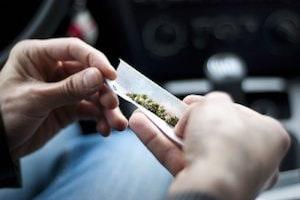
Marijuana has been legal for recreational use in California since voters passed Proposition 64 in November 2016, with licensed retail sales beginning January 1, 2018. With legal cannabis now firmly part of daily life across Los Angeles and the rest of the state, law enforcement and safety researchers have raised growing concern about drivers who get behind the wheel while impaired by marijuana. When a driver who is high on cannabis causes a collision, the people they injure have the right to pursue compensation through a California personal injury claim. Our Los Angeles car accident attorneys have represented injured victims and grieving families in impaired-driving cases for over 30 years.
Yes. Driving under the influence of marijuana is a crime in California, just like driving drunk. Several provisions of the Vehicle Code apply:
Unlike alcohol, where a blood-alcohol concentration of 0.08% creates a per se presumption of impairment, California has no fixed legal limit for THC (the active compound in marijuana) in a driver’s blood. THC affects people differently and can linger in the body long after the impairing effects have worn off, so a simple number does not reliably prove impairment. Instead, prosecutors and civil attorneys build the case using other evidence.
Because there is no breathalyzer equivalent for cannabis, proving that a driver was impaired by marijuana usually depends on a combination of the following:
Insurance and highway-safety researchers have studied crash trends in states that legalized recreational marijuana ahead of California. The Insurance Institute for Highway Safety (IIHS) and Highway Loss Data Institute (HLDI) have published a series of analyses comparing legalization states with neighboring control states:
Researchers continue to debate the precise size of the effect, and some studies that control for road, traffic, and population differences find smaller or mixed results. What is clear is that marijuana can slow reaction time, impair coordination, and reduce a driver’s ability to track lane position — all of which increase crash risk and can support a finding of negligence.
Every driver owes a duty to operate a vehicle with reasonable care. Driving while impaired by marijuana breaches that duty. In a civil claim, an impaired driver who causes a collision can be held liable for the resulting harm under ordinary negligence principles.
California law also recognizes negligence per se. Under Evidence Code § 669, when a driver violates a safety statute — such as the Vehicle Code’s prohibition on driving under the influence — and that violation causes the type of harm the law was designed to prevent, negligence is presumed. A criminal DUI conviction arising from the same crash can be powerful evidence in the related civil case. Marijuana-impaired driving frequently overlaps with our broader DUI accident claims in California practice, and many of the same proof strategies apply.
Victims injured by a marijuana-impaired driver may be entitled to recover both economic and noneconomic damages. The categories and amounts depend on the specific facts of each case.
These compensate for direct, measurable financial losses, including past and future medical expenses, rehabilitation costs, lost income and reduced earning capacity, and property damage. Catastrophic collisions can produce lifelong costs — for example, when a crash causes a traumatic brain injury or spinal cord injury.
These compensate for the human cost of an injury: pain and suffering, emotional distress, disfigurement, and the loss of enjoyment of life. When an impaired driver kills someone, surviving family members may bring a wrongful death claim for their own losses, including the loss of companionship and support.
Punitive damages are a separate category awarded in rare, egregious cases to punish a defendant and deter similar conduct. Under California Civil Code § 3294, they require clear and convincing proof of malice, oppression, or fraud — something well beyond ordinary negligence.
In Taylor v. Superior Court (1979) 24 Cal.3d 890, the California Supreme Court held that a plaintiff injured by a drunk driver could seek punitive damages, reasoning that a person who chooses to drive while intoxicated acts in conscious disregard of the safety of others. The same logic can extend to a driver who knowingly gets behind the wheel while impaired by marijuana — particularly where there is a history of impaired driving or other aggravating circumstances.
California follows a pure comparative fault rule. Under Li v. Yellow Cab Co. (1975) 13 Cal.3d 804, an injured person can still recover damages even if they were partially responsible for the crash; the recovery is simply reduced by their percentage of fault. So even if an insurer argues you share some blame, you are not automatically barred from compensation when an impaired driver contributed to the collision. Insurance companies often raise comparative fault to reduce what they pay, which is one reason it helps to have experienced counsel.
Our firm has a long track record handling collisions caused by intoxicated and impaired drivers. Representative results include:
Every case is different, and prior results do not guarantee a similar outcome. Each claim must be evaluated on its own facts.
Yes. If a marijuana-impaired driver caused your collision, you can pursue a civil claim for your injuries and losses regardless of whether the driver is criminally prosecuted. The civil case is separate from any criminal DUI case.
No. A criminal conviction can strengthen your civil case, but it is not required. Civil claims use a lower burden of proof (a preponderance of the evidence) than criminal cases (beyond a reasonable doubt), so you may recover even if the driver is never convicted.
No. California has not set a per se blood-THC limit the way it has a 0.08% limit for alcohol. Impairment is instead proven through officer observations, driving behavior, Drug Recognition Evaluator findings, and chemical testing.
California’s pure comparative fault rule still allows you to recover. Your compensation is reduced by your share of fault, but you are not barred from recovering against the impaired driver.
Most California personal injury claims must be filed within two years of the date of injury, and claims against a government entity have much shorter deadlines. Because exceptions apply, it is best to speak with an attorney promptly so you do not lose your rights.
| If you or a loved one was injured by a driver impaired by marijuana, our team can investigate the crash, gather evidence of impairment, and pursue full compensation. Steven M. Sweat, Personal Injury Lawyers, APC has fought for injured Californians for over 30 years on a contingency-fee basis — you pay no fee unless we win. Call 866-966-5240 for a free consultation, or contact us online. Se habla español. |